
2025 Food Container Market Insights: What Restaurants and Distributors Need to Know
As takeout, meal prep, and delivery continue to dominate the foodservice landscape, food containers have become one of the most influential components of modern restaurant operations. According to Grand View Research, the global food container market reached $154.9 billion in 2024 and is expected to grow at a 4.5% CAGR(Compound annual growth rate) through 2032, driven by rising demand for wholesale food packaging, ready-to-eat meals, and efficient delivery systems.
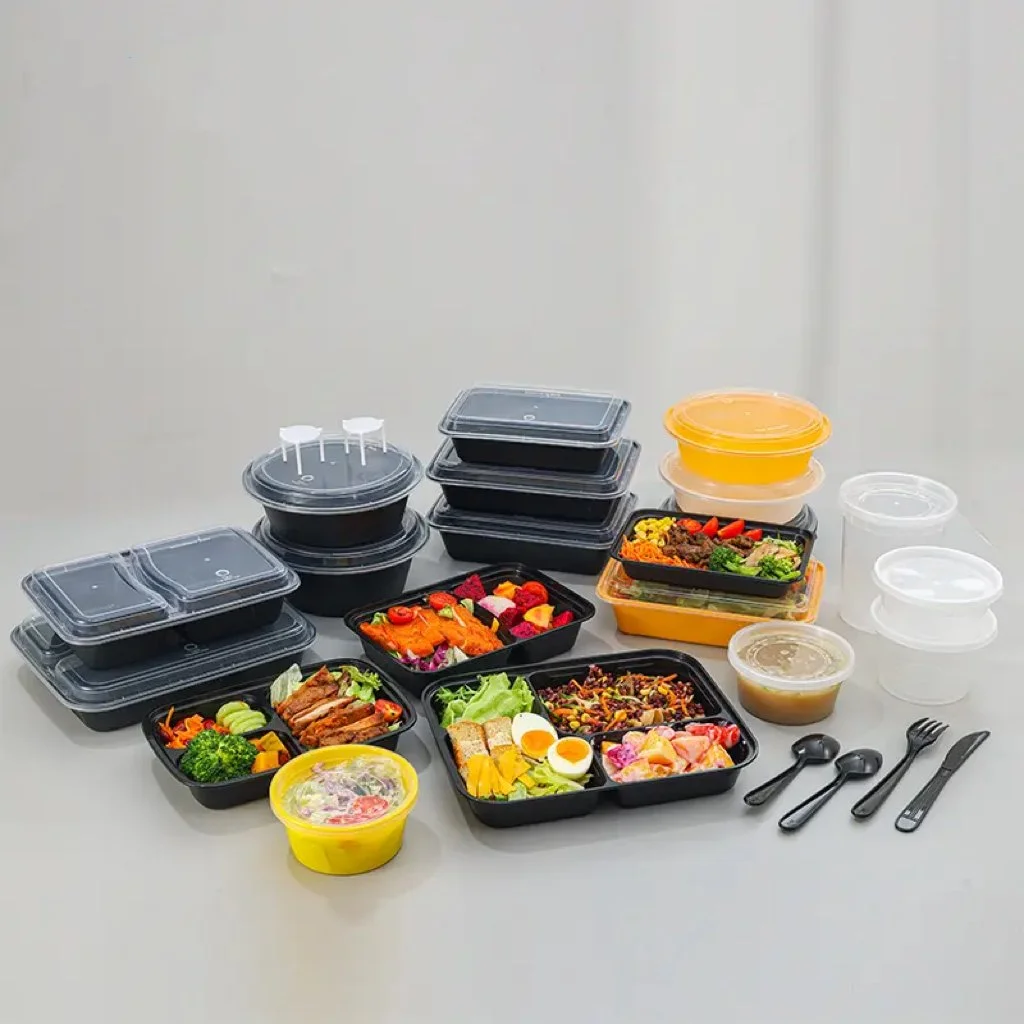
Our HD™ Products are high-quality, heavyweight containers crafted from durable and resilient plastic.
Growing Demand for High-Quality Takeout Packaging
The National Restaurant Association reports that 68% of U.S. consumers order takeout at least once per week, making reliable takeout packaging essential for restaurants, cloud kitchens, and distributors. Among all options, meal prep containers, multi-compartment trays, and microwave-safe PP containers remain the most widely used solutions because they maintain food quality and improve customer satisfaction.
Popular SKUs in today’s market include:
Black-base meal prep containers with clear lids
Round PP deli containers (8 oz to 32 oz)
Leak-resistant bowls for soups and salads
Disposable forks, spoons, and knives
These categories represent over 55% of the U.S. disposable container market, making them core products for any food packaging supplier or distributor.
Why PP Containers Dominate
Polypropylene (PP) remains the leading material for disposable food containers, accounting for nearly 50% of global food-grade plastic usage. Restaurants and wholesalers prefer PP because it is:
Microwave-safe
Heat-resistant and durable
Lightweight for shipping
Leak-resistant for delivery
Fully recyclable under resin code #5
Compared with PET or polystyrene, PP offers the strongest balance of cost, performance, and environmental compliance — a major reason why PP meal prep containers continue to lead sales in both retail and wholesale markets.
Operational Benefits for Restaurants and Distributors
Beyond food presentation, packaging efficiency has a direct impact on business performance. Research from NPD Group shows that restaurants using standardized containers reduced packing time by up to 22%, improving labor efficiency during peak hours.
Stackable lids, sturdy bases, and consistent sizing also help restaurants streamline inventory and reduce breakage during transport.
For distributors and wholesalers, reliable packaging reduces claims, improves palletization, and ensures smoother logistics from warehouse to end customer.
Sustainability and Regulatory Trends
As more states adopt restrictions on non-recyclable plastics, the market is shifting toward recyclable PP containers, mono-material lids, and eco-friendly food packaging solutions. In 2024, 31% of U.S. restaurants planned to upgrade to more sustainable packaging by 2026.
Conclusion
In an industry where speed, quality, and presentation matter, choosing the right food containers is essential for restaurants, meal prep businesses, and wholesale distributors. With rising demand for durable, microwave-safe, and eco-friendly packaging, PP containers will remain the backbone of the foodservice supply chain in 2025 and beyond.
Looking for a Reliable Packaging Supplier?
We provide wholesale food containers with stable inventory and competitive pricing.
